
Malaya garnet (also spelled Malaia) is a rare blend of pyrope and spessartine, showing pinkish orange to peach to reddish-orange colours. It was first discovered in the 1960s in the Umba Valley, located on the border of Tanzania and Kenya. Malaya garnet ranks 7 to 7.5 on the Mohs scale of hardness and is usually sold in its natural state.
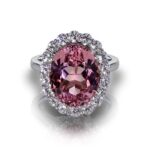
What is Malaya Garnet?
Malaya garnet is not a separate mineral species. Like other garnets, it is within the pyralspite series of garnets, with the primary component of pyrope and spessartine, with secondary components of almandine, and grossular.
It is the “cousin” of spessartine garnet. Because it is a mixture of various components, its colour can range from pinkish orange to reddish orange and to yellowish orange.
Origin and Meaning of the Name
Malaya garnet was first discovered in the 1960s by Tanzanian miners in the Umba Valley. Miners were searching for rhodolite garnets and sapphires. Upon bringing the orange to pink stones to dealers, they were rejected, because the dealers did not recognize the stones as garnets.
The miners of Tanzania named the stones “Malaya,” meaning “outcast” or “out of the family” in the Swahili language. The name stuck, and it became very popular in the 1970s.
The original Umba deposit has since been largely exhausted. Other deposits have been located at:
– Tunduru, southern Tanzania
– Bekily, Madagascar, since the 1990s
– Mahenge, Tanzania, since 2015
– Kenya and Sri Lanka
Metaphysical meaning: According to crystal lore, garnets are associated with energy, passion and protection. Malaya is often associated with creativity and warmth. These are traditional beliefs and have no scientific basis. Garnet is also the birthstone for January.
Rarity and Desirability
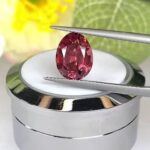
Malaya garnets are rare for the following reasons:
– Original sources no longer produce it in significant amounts.
– Newer sources produce it sporadically.
– There are few specimens that are 3 carats and larger, and even fewer at 4 to 5 carats.
– Vibrant shades of peach and orange are very rare.
What makes it attractive to collectors is that:
– It is not treated.
– It is not common to find garnets in these shades.
– It has an interesting backstory, being banned by the Czars and subsequently being sought after.
Some trade names you should know are:
– Imperial garnets are peach to pinkish orange in colour.
– Champagne garnet, named for the tan to beige colour.
– Umbalite, another name associated with garnets from the Umba Valley.
The lines between Malaya, mandarin garnet, and other pyrope-spessartine garnets are not always sharp, so a stone may sit on the border between named varieties.
Characteristics and Uses
| Property | Detail |
| Species | Pyrope-spessartine blend (may include almandine, grossular) |
| Crystal system | Cubic |
| Hardness | 7 to 7.5 (Mohs) |
| Refractive index | About 1.76 |
| Specific gravity | About 3.78 to 3.85 |
| Colour | Pinkish orange, reddish orange, yellowish orange |
| Cleavage | None |
Jewellery use: 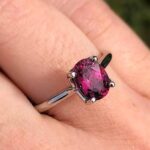
- Rings: hard enough for everyday wear in a protective setting (bezel or low prong)
- Earrings and pendants: best choice, since it takes less knock
- Metals: yellow and rose gold complement the warm hues, while white gold and platinum create contrast
- Cuts: round, oval, and cushion cuts are popular, because they emphasize brilliance and don’t darken the colour
How is Malaya Garnet Quality Evaluated?
Like other coloured stones, it depends primarily on colour, followed by size, clarity, and cut.
- Colour (most important)
- Pinkish-orange and peach stones are the most sought after.
- Honey-peach and cinnamon are rare.
- Lesser brown makes it more desirable.
- Uniform, vivid colour is preferable to darker or lifeless tone.
- Clarity
- Needle-like inclusions are typical and help with identification.
- Eye-clean stones are worth more.
- Cut
- A proper cut maintains brightness and avoids dark areas that might affect the colour.
- Carat weight
- The cost rises significantly starting from 3-carat stones.
- Origin and identification
- The characteristics of Malaya can be confused with those of other garnets like grossular; therefore, lab test is often necessary.
- The lab report assures that you purchase the right variety and that no treatments were applied.
Buying tip: Ask the seller for the variety name, origin if known, and treatment disclosure in writing.
Caring for Malaya Garnet
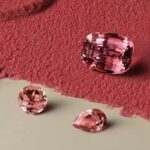
Garnet is tough, but it still needs some care.
Do:
- Using warm water, mild soap, and a soft brush.
- Rinsing it thoroughly and drying with a soft cloth.
- Storing it away from hard gemstones such as diamonds and sapphires that may scratch it.
- Removing rings during strenuous activities or playing sports.
Avoid:
• Using steam cleaners and aggressive substances such as acids.
- Sharp changes in temperature.
- Ultrasonic cleaning. This process is permitted by some sources but can damage inclusions under ultrasound and heat conditions. It is better to clean the stone manually.
Conclusion
Initially being rejected, Malaya garnet has become one of the unique representatives of garnet group. For those who appreciate light peach, pink, or orange tones and would like to get rarer gemstone than regular garnet, Malaya garnet is a good choice. When choosing the stone, pay attention to its colour first; buy it with certificates and take proper care.
Frequently Asked Questions
Malaya garnet is a variety of garnet made from a mix of pyrope and spessartine, often with some almandine or grossular. It shows pinkish-orange, peach, reddish-orange, or yellowish-orange colours. It was first found in the Umba Valley on the Tanzania-Kenya border.
No. Spessartine is a single garnet species, while Malaya is a blend that includes spessartine, usually with pyrope. The two can look similar in orange shades, so lab testing is sometimes needed to tell them apart.
Pinkish-orange and peachy stones are generally the most valued, along with rarer shades like honey-peach and cinnamon. Stones with less brown and an even, bright colour usually cost more.
It is usually sold untreated and natural. Still, ask the seller for written treatment disclosure or a lab report before buying.
The price depends on colour, size, clarity, and origin. Peach-pink shades and stones over 3 carats cost the most. Check current prices from reputable dealers, because they change with supply.