Are Lab Grown Gemstones are just as good as Natural Gemstones? Here’s everything you need to know before you buy.
Introduction: The New Age of Gemstones
Lab Grown Gemstones vs Natural Gemstones have long been treasured for their color, rarity, and symbolism. But today, you don’t have to rely solely on what’s mined from the Earth Lab Grown Gemstones are a fast-growing alternative.
So, how do Lab Grown Gemstones compare to Natural Gemstones? Are they real? Are they cheaper, better, or less valuable?
Let’s explore the science, cost, sustainability, and emotional factors behind Lab Grown Gemstones vs Natural Gemstones to help you decide what’s right for you.
What Are Natural Gemstones?
Natural Gemstones are formed over thousands to millions of years within the Earth through natural geological processes like heat, pressure, and mineral crystallization.
These include stones like:
- Emeralds from Colombia
- Ruby from Myanmar
- Sapphires from Sri Lanka or Madagascar
- Aquamarine, garnet, and tourmaline from various regions
They are cut and polished, but not created or significantly altered in a lab.
Pros of Natural Gemstones
- Unique Origin & Geological History
Each natural Gemstone is a one-of-a-kind creation of the Earth, often formed over millions of years under natural heat and pressure. This geological journey adds timeless beauty and emotional value. -

Photo Credit: GIA Natural Inclusions = Authentic Character
Unlike flawless lab stones, Natural Gems often feature subtle inclusions tiny imperfections that serve as “birthmarks,” making each stone unique and authentic. - Higher Resale & Collector Value
High-quality Natural Gemstones (especially Rubies, Sapphires, Emeralds, and Diamonds) can retain or even increase in value over time, making them more appealing to collectors and investors. - Cultural & Historical Significance
Natural Gems have been used in royal jewelry, religious artifacts, and traditional heirlooms across centuries, adding symbolic and heritage appeal. - Emotional & Sentimental Appeal
For many, a Natural Gemstone feels more romantic or meaningful, especially for engagement rings, family heirlooms, or milestone gifts. - Prestige & Rarity
Natural Gemstones are often viewed as more prestigious or luxurious, particularly rare specimens with intense color or flawless clarity. - Wide Recognition & Trust
Natural stones have long-standing Certification Systems (e.g., GIA, AGS) that reinforce their value, authenticity, and grading.
Cons of Natural Gemstones
- Higher Price Point
Natural Gemstones are often significantly more expensive than their lab-grown counterparts due to their rarity, mining costs, and market demand. - Ethical Concerns
Some Natural Gemstones may come from conflict zones or involve unethical labor practices. Without clear traceability, it’s hard to guarantee responsible sourcing. - Environmental Impact
Mining for Natural Gemstones can cause habitat destruction, water pollution, and soil erosion, contributing to long-term environmental harm. - Visible Inclusions or Imperfections
Most Natural Gems contain inclusions, which can affect clarity, durability, and visual appeal—especially in stones like emeralds. - Inconsistent Quality
Natural Gems can vary widely in color, clarity, and size—even within the same type—making it harder to find a perfectly matching pair for earrings or custom designs. - Limited Availability
High-quality Natural Gemstones (especially untreated ones) are rare and may be difficult to source consistently or in large sizes. - Potential for Mislabeling or Treatment
Some Natural Gems are heat-treated, dyed, or filled to enhance color or clarity—practices that may not always be fully disclosed to buyers.
What Are Lab Grown Gemstones?

Lab Grown (or synthetic) Gemstones are created in a lab using high-tech processes that replicate the natural formation of the gem.
The result? A Real Gemstone chemically and physically identical to the natural version, but made in weeks or months instead of millennia.
Popular Lab Created stones include:
- Lab Grown emeralds, sapphires, and rubies
- Moissanite (often lab-created)
- Spinel, garnet, and even opal imitations
Pros of Lab Grown Gemstones
- More Affordable
Lab Created gemstones typically cost 30–80% less than natural ones of the same size and quality making luxury more accessible. - Visually Flawless
These gems are often grown in controlled environments, resulting in minimal to no inclusions, exceptional clarity, and vivid color consistency. - Ethically Sourced
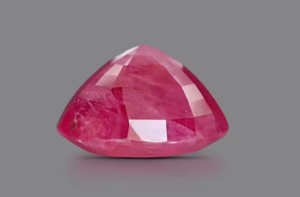
Photo Credit: GemPundit Since no mining is involved, lab-grown gemstones are conflict-free and free from labor exploitation, making them ideal for ethical consumers.
- Eco-Friendly Alternative
Lab Grown Gems have a Lower Environmental Footprint compared to mining, especially in terms of land use, energy consumption, and pollution. - Customizable & Consistent Supply
Growing Gems in a lab allows for consistent color, cut, and size, and they can be made to order—perfect for custom jewelry or matching sets. - Real Gemstones (Not Imitations)
Lab Grown stones share the same chemical, physical, and optical properties as natural gems. For example, a lab-grown ruby is still made of corundum. - Great for Everyday Wear
Thanks to their clarity and affordability, lab-grown gems are popular for fashion jewelry, engagement rings, and pieces worn regularly.
Cons of Lab Grown Gemstones
- Lower Resale Value
Lab Grown gemstones currently have limited resale or investment value compared to natural stones, which may affect long-term worth. - Perceived as Less “Authentic”
Some buyers feel lab Created Gems lack the emotional or historical value of Earth-formed stones, especially for symbolic jewelry like engagement rings. - Limited in Some Varieties
While sapphires, emeralds, and rubies are widely available in lab form, less common stones (like opal or alexandrite) may not have lab equivalents or may not match the quality of natural ones. - Can Be Confused with Simulants
Shoppers may confuse lab-grown gemstones with fake or imitation stones (e.g., cubic zirconia or glass), even though they’re chemically identical to Natural Gems. - Not All Labs Are Transparent
Some sellers may not clearly disclose a gem’s origin. Always check for certification or reputable sources to avoid misleading purchases.
Can You Tell the Difference?
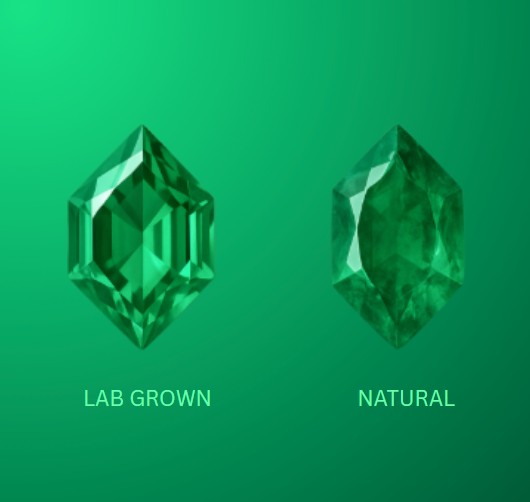
Visually? Often, no especially with the naked eye. Inclusions in natural stones can look charming or messy; lab-grown gems tend to be clearer and more uniform.
So how are they different?
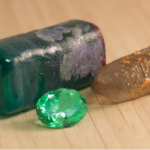
While they may appear visually the same, here’s what sets Lab Grown Gemstones vs Natural apart:
| Feature | Lab Grown Gemstones | Natural Gemstones |
| Inclusions | Often minimal or controlled | Natural, varied, and unique |
| Color Consistency | Very uniform | May vary slightly in tone |
| Certification | Usually laser-inscribed or labeled | Certified by origin labs |
| Price Point | Lower (30–80% cheaper) | Higher due to rarity |
| Origin Evidence | Shows lab formation signs under magnification | Shows natural growth patterns |
| Testing Tools | Requires gemological tools to detect | Also confirmed through tools |
Unless you’re trained or using specialized equipment, you won’t be able to visually tell a lab-grown gemstone from a natural one. That’s why transparency from sellers and proper certification matter when shopping for gemstones.
How experts tell Lab Grown Gemstones vs Natural apart:
- Gemologists use magnification, spectroscopy, and advanced testing to detect growth patterns, trace elements, or UV reactions.
- Reputable labs like GIA, IGI, and GCAL provide full disclosure and certification of origin.
Are Lab Grown Gemstones Real?
Yes Lab Grown Gemstones are 100% real gemstones. 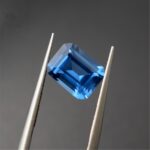
They are not fake, not simulants, and not imitations like glass or cubic zirconia.
Lab Created Gemstones have the same Chemical Composition, Crystal Structure, and Optical Properties as natural gemstones formed in the Earth. The only difference? Their origin.
Example: A lab Created sapphire is made of corundum, just like a natural sapphire.
They’re Ethically Real, Too
In addition to being physically real, Lab Grown Gemstones are a more ethical and eco-conscious option, free from mining and potential conflict sources.
Lab Grown Gemstones vs Natural Gemstones : Comparison Table
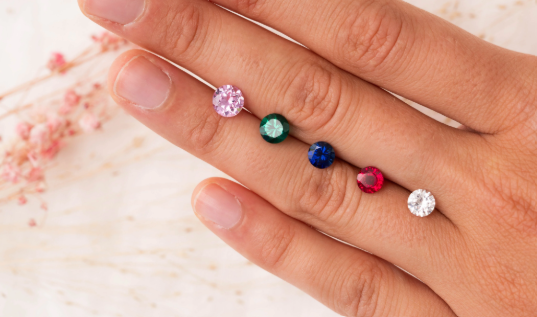
| Feature | Natural Gemstones | Lab-Grown Gemstones |
| Origin | Earth | Laboratory |
| Formation Time | Millions of years | Weeks to months |
| Visual Appearance | Often includes inclusions | Typically flawless |
| Price | Higher | More affordable |
| Environmental Impact | Higher (due to mining) | Lower (lab creation) |
| Ethical Concerns | Possible (conflict, labor) | Minimal |
| Resale Value | Higher in some cases | Generally lower |
Lab Grown Gemstones vs Natural Gemstones: Which Should You Choose?
Here’s how to decide:
Choose Natural Gemstones if:
- Appreciate the rarity and uniqueness of Earth-made treasures
- Value heritage, tradition, and emotional symbolism
- Are looking for potential investment or resale value
- Want a gemstone with a geological story and natural inclusions

Photo Credit: Grown Brilliance - Prefer high-end collector pieces or one-of-a-kind designs
Ideal for: Heirlooms, collectors, milestone gifts, buyers seeking natural luxury.
Choose Lab Grown Gemstones if:
- Want stunning clarity and color at a lower price
- Care deeply about ethical sourcing and eco-conscious choices
- Prefer a modern, scientific marvel that reflects innovation
- Need a gemstone for daily wear (less stress if damaged or lost)
- Are buying for fashion, engagement rings, or gifting on a budget
Ideal for: Engagement rings, Everyday Jewelry, Trend-conscious Buyers, Sustainable Shoppers
Both are beautiful, real options. It’s not about which is “better,” but which suits your values, budget, and style.
Why Natural Gemstones Still Reign Supreme: A Jeweler’s Take
In a world of fast fashion and synthetic sparkle, it’s tempting to see Lab Created gemstones as the future. But for those of us who’ve spent years behind the counter, at the bench, or deep in the mines of gemological history, the truth is clear:
Natural gemstones aren’t just better – they’re irreplaceable.
1. Rarity = Value
The allure of a Natural Gemstone lies in its Scarcity. A flawless Lab Gemstone can be made in weeks. The supply of Lab Grown Gemstone is unlimited. According to Micro-economics, When the supply in more it’s value decreases. A natural Gems takes over a billion years to form. Clients looking for true value, legacy, and investment potential often choose nature’s originals and they should. Natural stones retain and often grow in value.
2. Every Natural Gem Tells a Million-Year Story
Lab-created stones may mimic the look, but they lack the geological legacy. A Natural Gemstone is a piece of Earth’s timeline formed under unimaginable pressure and heat over millennia. No machine can replicate that kind of story.
Final Thoughts: Your Gem, Your Story
Whether born deep within the Earth or crafted by human innovation, gemstones are about meaning, beauty, and connection. A natural stone carries Earth’s history; a lab-grown stone reflects modern ethics and technology.
No matter which you choose, the right gemstone is the one that shines with your story.
CHECK OUT THIS REEL FOR A QUICK UPDATE: